10 Fascinating Insights into Hummingbird Behavior

Corridor read

10 Fascinating Insights into Hummingbird Behavior

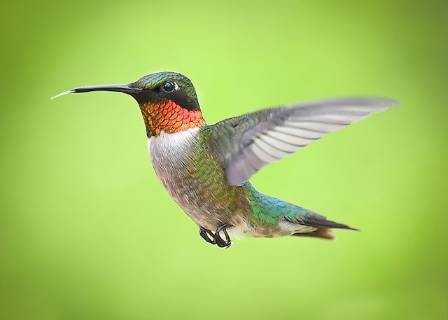
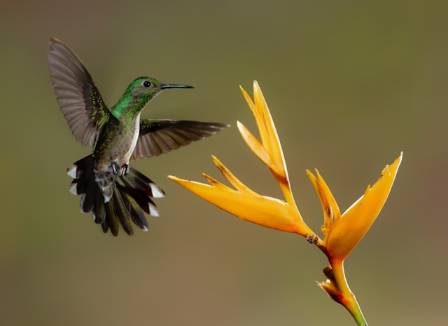
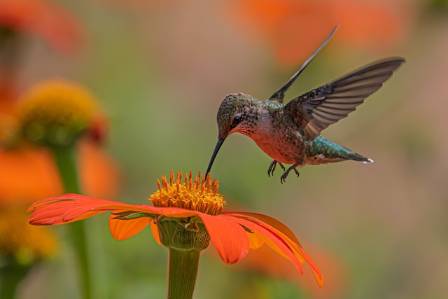
Hummingbirds continue to astonish scientists and bird enthusiasts with their remarkable adaptations and intriguing behaviors. These tiny aerial acrobats possess unique characteristics that set them apart from other avian species. Here are ten captivating aspects of their behavior that reveal the extraordinary nature of these feathered wonders.

R

Rebecca Mitchell

Temple note

Layer tip

The full corridor digest continues below along soft meter ticks.

Path

Temple Corridor

Hummingbirds continue to astonish scientists and bird enthusiasts with their remarkable adaptations and intriguing behaviors. These tiny aerial acrobats possess unique characteristics that set them apart from other avian species. Here are ten captivating aspects of their behavior that reveal the extraordinary nature of these feathered wonders.

The Science Behind the Hum

The characteristic humming sound that gives these birds their name originates from their rapid wing movements rather than vocalizations. While most birds generate lift and noise primarily during the downstroke of their wings, hummingbirds achieve both lift and distinctive auditory effects during both upward and downward strokes. Their wings beat at approximately 40 cycles per second, creating the continuous humming vibration that makes them instantly recognizable.

Specialized Feeding Adaptations

Hummingbirds possess extraordinary tongue structures that extend twice the length of their beaks. Their forked tongues feature lamellae—microscopic, hair-like projections that expand outward when the tongue is extended. This sophisticated mechanism allows them to efficiently capture nectar, with the tongue retracting into a specialized coil around their skull. These remarkable birds can extend and retract their tongues up to twenty times per second while feeding.

Migration Driven by Metabolism

With metabolisms that demand feeding every 10-15 minutes, hummingbirds require the caloric equivalent of 150,000 human calories daily. This incredible energy requirement drives their seasonal migrations as they follow blooming patterns and seek habitats that can support their nutritional needs through changing seasons.

Color Perception Beyond Human Capabilities

While hummingbirds demonstrate a noticeable attraction to red-colored feeders, research indicates their color perception extends far beyond what humans can visualize. These birds perceive colors across a broad spectrum, with particular sensitivity to warmer hues, though their visual capabilities include many shades invisible to human eyes.

Energy-Conserving Torpor States

Observers may occasionally encounter hummingbirds suspended upside-down in what appears to be an unusual position. This behavior typically indicates the bird is in a torpor state—a physiological condition characterized by reduced metabolic activity and lowered body temperature. This energy-conserving adaptation can last from twenty minutes to an hour and helps them survive both cold temperatures and periods of energy scarcity.

Complex Social Interactions

Despite their small size, hummingbirds display remarkably assertive territorial behaviors. They vigorously defend feeding areas through dramatic aerial displays, including high-speed chases and aggressive diving maneuvers. Males also employ these impressive flight patterns during courtship rituals, combining aerial acrobatics with distinctive vocalizations to attract potential mates.

Sophisticated Communication Methods

While hummingbirds don't produce elaborate songs like many bird species, they communicate through an array of chirps, calls, and specialized sounds. Their most expressive communications occur through physical displays, including precisely orchestrated flight patterns and body postures that convey territorial claims and mating intentions.

Continuous Feeding Patterns

Due to their exceptionally high metabolic rates, hummingbirds maintain nearly constant feeding activity throughout daylight hours. While peak activity typically occurs during early morning and late afternoon, these birds visit food sources repeatedly from dawn until dusk to meet their substantial energy requirements.

Varied Winter Strategies

Contrary to popular belief, not all hummingbirds migrate south during winter months. The Anna's Hummingbird, for instance, remains year-round in Pacific Northwest regions where mild winter conditions and reliable food sources permit survival. These resilient birds utilize winter-blooming flowers and maintained feeders to sustain themselves through colder periods.

Exceptional Spatial Memory

Hummingbirds possess remarkable navigational abilities and precise memory for food source locations. Migratory individuals consistently return to established feeding sites, often revisiting the specific flowers and feeders they utilized in previous seasons. Their impressive spatial memory even includes recognition of feeding locations from their early developmental stages.
These fascinating behavioral adaptations demonstrate how hummingbirds have evolved to occupy their unique ecological niche. From their specialized feeding mechanisms to their complex social behaviors, these captivating birds continue to reveal new wonders to those who take the time to observe them closely.

More along this corridor

MD

MID · en

How Space Probes Work

How Space Probes Work

Space probes are some of the most valuable instruments humans have created for investigating the enormous reaches of our solar system and the universe beyond it. These unmanned spacecraft allow scientists to gather information about planets, moons, asteroids, comets, and other distant objects, helping us better understand how the universe developed and whether life might exist elsewhere.

MD

MID · en

How to Draw a Hot Air Balloon Easily

How to Draw a Hot Air Balloon Easily

Looking for a simple way to draw a hot air balloon? You’re in the right place! Whether you’re a complete beginner or helping kids explore creativity, this easy step-by-step tutorial is perfect for all ages.

MD

MID · en

8 Spectacular Sea Arches You Must See Around the World

8 Spectacular Sea Arches You Must See Around the World

Sea arches are one of nature’s most stunning creations. Carved over millennia by relentless waves and tides, these stone formations offer breathtaking views and unforgettable photo opportunities. Some arches are accessible only by boat, while others can be explored on foot at low tide. Here are eight of the world’s most remarkable sea arches.

MD

MID · en

Morning Glory Flower Meaning and Secret Symbolism

Morning Glory Flower Meaning and Secret Symbolism

Morning glory is a versatile flowering vine that can be grown as either an annual or a perennial, depending on the climate. Although its blooms are famous for opening in the early hours of the day, this vigorous climber adds beauty to gardens from sunrise to sunset. Given plenty of sunlight and space to spread, morning glory quickly covers fences, trellises, and walls with its colorful blossoms.

MD

MID · en

Hiking to the Horseshoe Bend Overlook

Hiking to the Horseshoe Bend Overlook

The round-trip walk to the Horseshoe Bend viewpoint is about 1.5 miles (2.4 km) along a hardened trail. The route is accessible in accordance with the requirements of the Architectural Barriers Act. Two shaded shelters are positioned along the trail, although there is no shade structure at the overlook itself.

MD

MID · en

Watercolor Around the World

Watercolor Around the World

Five artists from across the globe share the joys and challenges of plein air painting at home and abroad.