Corridor read
What Is a Satellite?
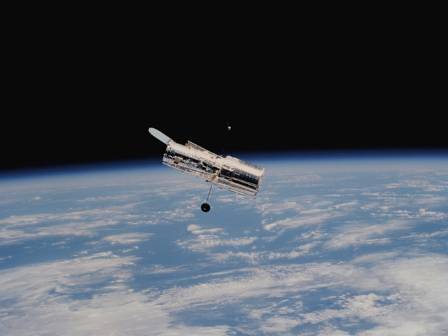
A satellite is any object that travels around a planet, star, or other celestial body. Earth is a natural satellite because it revolves around the Sun, while the Moon is a natural satellite that circles Earth. When humans send a spacecraft into orbit around Earth or another object in space, that spacecraft is also considered a satellite.
Evan Blair
Temple note
Layer tip
The full corridor digest continues below along soft meter ticks.
Path
Temple Corridor
A satellite is any object that travels around a planet, star, or other celestial body. Earth is a natural satellite because it revolves around the Sun, while the Moon is a natural satellite that circles Earth. When humans send a spacecraft into orbit around Earth or another object in space, that spacecraft is also considered a satellite.
Artificial satellites have become essential tools for studying our planet and exploring the universe. They help us observe weather, communicate across great distances, determine locations, and gather scientific information that would be difficult or impossible to collect from the ground.
What Is a Satellite?
When you hear the word “satellite,” you may picture a large mechanical spacecraft traveling around Earth. That is the meaning most people associate with the term, but the definition is actually much broader.
A satellite is any object that follows an orbit around a planet, star, moon, or another celestial body. An orbit is a repeated path that one object follows around another object in space. By this definition, Earth is a satellite of the Sun, and the Moon is a satellite of Earth.
In everyday conversation, however, the term “satellite” usually refers to a human-made spacecraft launched into space and placed into orbit around Earth or another celestial body.
Earth and the Moon are examples of natural satellites. In contrast, thousands of artificial satellites have been sent into orbit around Earth. Their missions vary considerably.
Some satellites photograph Earth's surface to help meteorologists monitor weather systems and follow hurricanes. Others observe the Sun, other planets, black holes, dark matter, or distant galaxies. The information collected by these spacecraft gives scientists a better understanding of our solar system and the wider universe.
There are even satellite galaxies. These are smaller galaxies that orbit larger galaxies, providing another example of how the word “satellite” can describe an object that revolves around another astronomical body.
Other artificial satellites are designed for communication. They can transmit television broadcasts, telephone calls, and other forms of information around the world. Satellites are also responsible for one of the technologies many people use every day: GPS.
The Global Positioning System, or GPS, consists of more than 30 satellites working together. By receiving signals from these satellites, devices such as smartphones can determine their position and help you find your home, a nearby business, or a destination on a map.
Why Are Satellites Important?
One of the biggest advantages of satellites is their ability to observe enormous portions of Earth at the same time. Because they can view such large areas from above, they can gather much more information in a shorter period than many instruments located on the ground.
Satellites also have an important advantage when scientists want to observe space. Ground-based telescopes must look through Earth's atmosphere, which contains clouds, dust, and various molecules that can interfere with observations.
Spacecraft operating above the atmosphere can avoid many of these obstacles. This gives satellites and space-based observatories a clearer view of distant objects and events throughout the universe.
What Are the Main Parts of an Artificial Satellite?
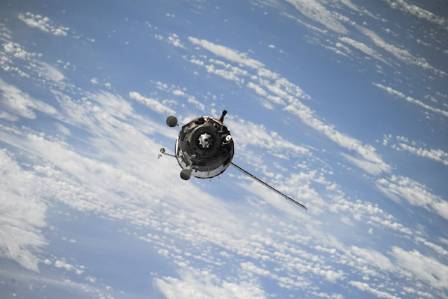
Artificial satellites are built in many different shapes and sizes, depending on what they are designed to accomplish. Despite these differences, most satellites contain at least two fundamental components: a communication antenna and a source of electrical power.
The antenna allows the spacecraft to transmit and receive information, often communicating with ground stations on Earth. Satellites need a reliable energy supply to operate their electronic systems, just as devices on Earth require batteries or another source of electricity.
Satellites can obtain power in several ways. Solar panels are one of the most common options. These panels collect sunlight and convert it into electrical energy that can be used by the spacecraft.
Some satellites also carry batteries, which can store energy for use when sunlight is unavailable or insufficient.
NASA satellites frequently include cameras and scientific instruments as well. Depending on their mission, these instruments may be aimed at Earth to examine its surface, atmosphere, oceans, and other features.
Other spacecraft point their sensors outward into space to study the solar system, stars, galaxies, and other phenomena throughout the universe.
How Do Satellites Orbit Earth?
Most artificial satellites reach space aboard rockets. After being launched, they are placed into carefully selected orbits around Earth or another celestial body.
A satellite remains in orbit when its forward motion and Earth's gravitational pull reach the right balance. If the conditions were different, the spacecraft could either continue moving away along a path into space or lose enough speed to fall toward Earth.
Satellites can operate at many different altitudes and travel at different speeds. Their orbital paths also vary according to their missions. Two widely used categories are geostationary orbits and polar orbits.
A geostationary satellite travels around Earth from west to east above the equator. It moves in the same rotational direction as Earth and completes its orbit at a rate that matches Earth's rotation.
Because of this synchronization, an observer on Earth can see a geostationary satellite as though it were remaining above one particular location. This makes this type of orbit especially useful for certain communication and weather-monitoring applications.
Polar-orbiting satellites follow paths that carry them approximately from north to south, passing near Earth's poles. As the planet rotates beneath the spacecraft, the satellite gradually passes over different sections of Earth's surface.
By continuing this process, a polar-orbiting satellite can eventually observe virtually the entire planet, scanning it in successive strips.
Why Don't Satellites Crash Into One Another?
Satellites can collide, although such events are uncommon. In February 2009, an American communications satellite and a Russian communications satellite collided while in orbit. The incident is widely considered to have been the first accidental collision between two artificial satellites.
Fortunately, space agencies and other organizations continuously monitor objects orbiting Earth. When a satellite is launched, engineers generally place it into an orbit selected to minimize the possibility of encountering other spacecraft.
However, satellite orbits are not always completely fixed. Gravitational effects and other factors can gradually change their paths. In addition, the number of satellites in space continues to increase, which means there are more objects that must be monitored and more opportunities for potential collisions.
What Is the History of NASA Satellites?
NASA's satellite history began with Explorer 1, which was launched in 1958. It became the first U.S. artificial satellite and also the first American satellite to carry scientific instruments.
One of Explorer 1's primary instruments was designed to detect high-energy particles known as cosmic rays. The mission produced important scientific information and marked a major milestone in the early exploration of space.
In 1959, NASA's Explorer 6 captured the first satellite image of Earth. The photograph was extremely basic by today's standards, but it demonstrated the enormous possibilities offered by observing our planet from orbit.
A year later, in 1960, TIROS-1 transmitted the first television image of Earth from space. Although these early photographs contained very little detail, they demonstrated how satellites could transform humanity's ability to observe Earth and the space environment.
Since then, satellite imaging technology has advanced dramatically. Modern spacecraft can produce highly detailed observations and collect enormous quantities of scientific data.
How Does NASA Use Satellites Today?
Today, NASA uses satellites to investigate Earth, other planets in our solar system, and objects far beyond it.
Earth-observing satellites gather information about clouds, oceans, land surfaces, ice, and the atmosphere. They can also measure atmospheric gases such as carbon dioxide.
NASA's Orbiting Carbon Observatory-2, also known as OCO-2, was launched in 2014 to measure carbon dioxide concentrations around Earth. Its observations help scientists study the global carbon cycle and investigate how measurements collected from space can improve our understanding of future changes in atmospheric carbon dioxide and Earth's climate.
Satellites can also monitor how much energy enters and remains within Earth's atmosphere and how much energy is ultimately released back into space. They are used to observe wildfires, volcanic activity, and the smoke produced by these events.
The information collected from satellites has many practical benefits. Scientists use it to improve weather and climate predictions. Public health organizations can use satellite observations to monitor conditions associated with disease and food shortages. Farmers can use environmental information to make decisions about crops, while emergency response teams can use satellite data during natural disasters.
Even a daily weather forecast often depends on observations collected by satellites.
Satellites that are directed away from Earth have equally important scientific missions. Some monitor potentially dangerous radiation and particles coming from the Sun. Others investigate asteroids and comets, examine how stars develop, and study the origins of planets.
Some spacecraft travel close to or enter orbit around other planets. These missions can search for evidence of water on Mars, investigate the surfaces and atmospheres of distant worlds, or capture detailed images of features such as Saturn's spectacular rings.
From monitoring weather on Earth to investigating distant planets and galaxies, satellites have become one of the most important tools humans use to observe and understand the world beyond our immediate surroundings.
More along this corridor
MID · en

Top 5 Highest Ski Resorts in the World
Top 5 Highest Ski Resorts in the World
MID · en
5 Thrilling Adventures to Ignite Your Wanderlust
Are you ready to step outside your comfort zone? From heart-pounding aquatic escapades to breathtaking aerial views and exhilarating land adventures, our curated list of the top 5 global adventures promises to ignite your spirit of exploration. Some experiences are simply unforgettable—let's dive into the thrill of adventure travel!
MID · en

Macau Tower A Landmark Above the Pearl River Delta
Macau Tower rises 338 meters above the city and stands as one of Macau’s most recognizable landmarks. From its observation deck, visitors can take in sweeping views across the Pearl River Delta, the urban landscape, and, on exceptionally clear days, even see toward Hong Kong.
MID · en

Liquid Calories: Are Liquid Calories Keeping You from Losing Weight?
You've been vigilant about your food intake, yet the scale refuses to budge as you'd like. The culprit might not be in what you're eating but rather in what you're sipping.
MID · en

The Ultimate Pancake Showdown: Testing 6 Celebrity Recipes to Find the Best
Pancakes are the definitive breakfast staple. They are straightforward enough for a Tuesday morning, yet special enough to anchor a holiday brunch. While supermarket mixes and frozen options exist, they pale in comparison to a fresh pancake boasting crispy edges and a tender center, served straight from the griddle.
MID · en

2 Artists Who Feature Bridges in Their Work
For my ongoing project, I’ve been focusing on the landscape of Lacock—a place rich with distinct elements, including Lacock Abbey, winding rivers, shallow fords, the main bridge, a smaller ford bridge, and sprawling vistas dotted with wildlife.