Corridor read
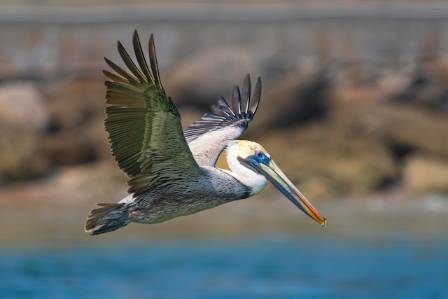
A bird flying close to the water's surface
Pacific Coast brown pelicans form breeding colonies from Baja California northward to California’s Channel Islands, with nesting activity occurring mainly during winter and spring. Once the breeding season ends, many birds migrate north. A small number remain visible in Monterey Bay throughout the year, but most individuals arrive during summer and remain in the area until early autumn.
Daven Holloway
Temple note
Layer tip
The full corridor digest continues below along soft meter ticks.
Path
Temple Corridor
Pacific Coast brown pelicans form breeding colonies from Baja California northward to California’s Channel Islands, with nesting activity occurring mainly during winter and spring. Once the breeding season ends, many birds migrate north. A small number remain visible in Monterey Bay throughout the year, but most individuals arrive during summer and remain in the area until early autumn.
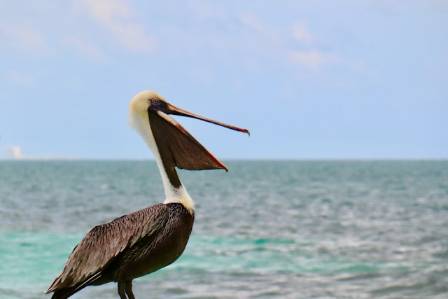
Brown pelicans are commonly observed flying low over the ocean, often gliding only a short distance above the water near the coast. They also frequently gather on breakwaters, jetties, docks, and wharf pilings to rest. When viewed from nearby, their yellow eyes, dark-colored legs, and black webbed feet are especially noticeable.
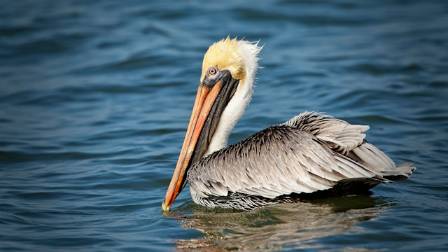
As autumn progresses, brown pelicans begin to develop their seasonal breeding plumage. One of the most dramatic changes is the throat pouch, which becomes a vivid bright red. This breeding-season coloration occurs in both males and females.
Conservation
Brown pelicans once experienced a major population decline because of the widespread use of the pesticide DDT. Exposure to this chemical disrupted their calcium metabolism, causing the birds to produce eggs with shells that were extremely thin and prone to breaking.
The decline became so severe that the U.S. Fish and Wildlife Service listed the brown pelican as an endangered species in 1970. In 1972, the U.S. Environmental Protection Agency banned the use of DDT within the United States.
These conservation measures helped produce a dramatic recovery in brown pelican populations. According to the International Union for Conservation of Nature and Natural Resources (IUCN) Red List, populations in some areas have increased by an estimated 712 percent during the past 40 years.
Recovery has been substantially greater along the Atlantic Coast than on the Pacific Coast. Nevertheless, the brown pelican has since been removed from Endangered Species Act protection throughout its range. The IUCN currently places the species in the “Least Concern” category.
Human activities continue to create risks for brown pelicans despite their recovery. Damage to or disturbance of nesting and resting sites can negatively affect their populations. Discarded fishing hooks and fishing line are another significant danger because these birds frequently spend time along the shoreline, where they can become tangled, hooked, or seriously injured.
Anglers should always collect their hooks and fishing line rather than leaving them behind. Any abandoned fishing equipment found around beaches, docks, or wharves should likewise be picked up and disposed of appropriately.
Cool Facts
Brown Pelicans Nest in Colonies
Brown pelicans breed colonially on California’s Channel Islands. When a pair constructs a nest, the male is responsible for gathering nesting materials while the female organizes and places them. The finished nest may begin as a shallow hollow or an elevated mound on the ground and can later be covered or lined with vegetation, feathers, soil, and other available materials.
Flying Close to the Ocean Saves Energy
Brown pelicans are often seen traveling in straight lines only a short distance above the ocean surface. This low-level flight allows them to take advantage of a phenomenon known as the “ground effect,” a term also used by pilots. Air becomes compressed beneath the wings, generating additional lift and allowing the birds to fly while using less energy.
Brown Pelicans Can Drink Salt Water
Marine birds can safely consume seawater because they possess specialized glands that remove excess salt from their bodies. These salt-excreting glands are located above the eyes and along the outer portions of the skull.
Different bird species dispose of the concentrated salty fluid in different ways. In brown pelicans, the liquid flows through grooves along the outside of the bill and eventually drips from the bill’s tip.
A Pelican’s Bill Can Hold More Than Its Stomach
The expandable pouch beneath a pelican’s bill can hold almost three times the volume of its stomach. It is capable of carrying close to three gallons of fish and water.
After completing a successful plunge dive, the pelican first allows excess water to drain from its pouch before swallowing its prey. Fish are generally swallowed headfirst. If necessary, the bird can reposition a fish before swallowing it. The large hook at the end of the bill also helps the pelican maintain its grip on fish that struggle to escape.
Brown Pelicans Are Specialized Plunge Divers
Brown pelicans and their close relatives, Peruvian pelicans, are the only pelican species that regularly capture prey by diving into the water from the air.
Most other pelican species typically feed while floating on the surface, catching prey directly from the water. Brown and Peruvian pelicans can also use this surface-feeding strategy occasionally, but their ability to plunge dive sets them apart from the other pelican species.
More along this corridor
MID · en
10 Delightful Facts About Farming
Summer invites us to wander through sun-dappled farmlands and lush rural landscapes, just as it calls us to appreciate the origins of the food on our plates. Why not blend the joy of seasonal exploration with a deeper understanding of agriculture? We’ve compiled 10 charming, little-known facts about farming—revealing that beyond its hardworking, practical nature, this age-old practice is dynamic, impactful, and full of surprises. From small backyard plots to sprawling agricultural operations, farming touches every aspect of our daily lives, often in ways we don’t even notice.
MID · en
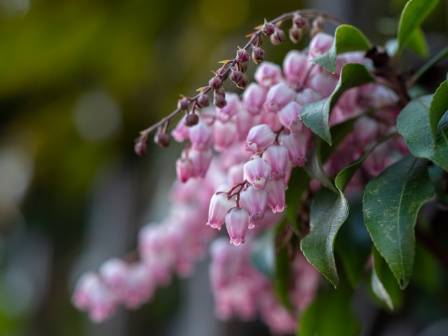
Now Blooming In the Nursery: Andromeda
Andromeda is one of the first shrubs to produce flowers in spring, offering a graceful and eye-catching display that deserves a closer look. The individual blooms resemble lily of the valley, but instead of appearing alone, they grow together in large hanging clusters along layered branches. Each flower cluster can reach up to 6 inches in length. Many varieties produce a pleasant fragrance, creating a sparkling effect in the early spring garden. Depending on the cultivar, the flowers may appear in shades of white, soft pink or deep rose.
MID · en
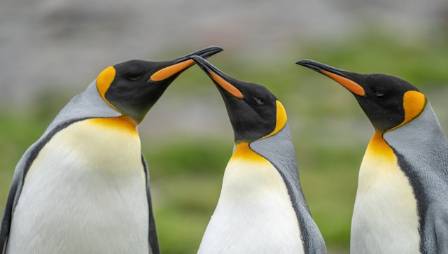
King Penguin
King penguins occupy a broad range across the sub-Antarctic region, forming large breeding colonies on islands scattered in a rough circle around the Antarctic continent. Their primary habitats include the Crozet Islands, Falkland Islands, Heard Island, Kerguelen Islands, Macquarie Island, Prince Edward Islands, South Georgia, and the South Sandwich Islands. These remote locations provide the cold but relatively stable environments that the species depends upon.
MID · en

The Tianjin Eye: The World's Only Ferris Wheel Built on a Bridge
The Tianjin Eye is the world's only Ferris wheel built on a bridge, spanning the Hai River and offering panoramic views up to 40 kilometres from its highest point. In March 2023, all 48 cabins were replaced with smarter, more comfortable designs featuring themed interiors, sky and ground screens, Bluetooth devices, and enhanced safety monitoring.
MID · en

How 3D Printing Is Transforming Modern Industry
3D printing is a manufacturing process that creates physical objects by building them layer by layer from a digital model. Once mainly used for simple plastic prototypes, it has now expanded into a wide range of fields including aerospace, healthcare, automotive engineering, food innovation, and education. Its global market has grown rapidly, valued at about $23.41 billion in 2025 and projected to reach $136.76 billion by 2034, showing how quickly the technology is being adopted worldwide.
MID · en
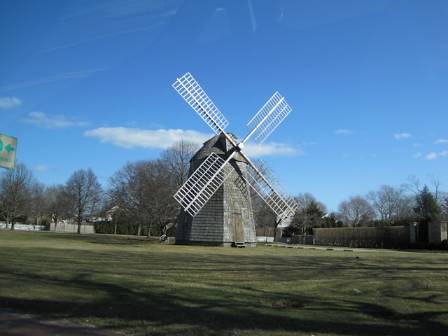
Exploring 5 Finest Windmills in the Netherlands
Embark on a journey through the picturesque Dutch landscape to uncover the beauty of the historic windmills, integral to the country's charm. These iconic structures, standing tall amidst the flat countryside, are not just symbols but living testaments to Dutch history. With over 1,000 windmills scattered across the nation, we guide you to the most enchanting ones. Join us on this discovery!