Corridor read
Essentials of Spacewalk Spacesuits
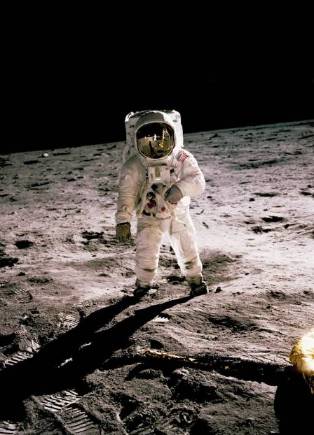
Spacesuits transcend mere apparel for astronauts; they are intricate systems tailored to diverse mission needs. The realm of space exploration employs two distinct types of spacesuits, each serving a unique purpose. While one is worn within a spacecraft during launch, ascent, re-entry, and landing, the focus here is on the spacesuit crafted explicitly for spacewalks, often termed an Extra-Vehicular Activity (EVA) suit by NASA.
Carter Thomas
Temple note
Layer tip
The full corridor digest continues below along soft meter ticks.
Path
Temple Corridor
Spacesuits transcend mere apparel for astronauts; they are intricate systems tailored to diverse mission needs. The realm of space exploration employs two distinct types of spacesuits, each serving a unique purpose. While one is worn within a spacecraft during launch, ascent, re-entry, and landing, the focus here is on the spacesuit crafted explicitly for spacewalks, often termed an Extra-Vehicular Activity (EVA) suit by NASA.
A spacewalk's fully equipped spacesuit is essentially a miniature spaceship mimicking the human form, safeguarding astronauts in the extraterrestrial void or on the Moon. Enduring radiation, dust, debris, and extreme temperature fluctuations, spacewalking astronauts confront challenges ranging from -250°F to 250°F. The suits maintain proper body pressure, supply drinking water, and deliver breathable oxygen.
The Extravehicular Mobility Unit (EMU) is the spacesuit designated for spacewalks outside the International Space Station, while NASA is developing the Exploration Extravehicular Mobility Unit (xEMU) for Artemis missions, incorporating innovative features while retaining fundamental elements.
The spacesuit's core components consist of the pressure garment and the life support system, comprising various integral elements:
Cooling Garment
The initial layer astronauts don is a specialized cooling garment made of spandex and water tubes, circulating chilled water to regulate body temperature during lengthy spacewalks.
Hard Upper Torso
Lightweight and robust, the hard upper torso acts as a connector between the suit's interior and the portable life support system. It encompasses the arm assembly, linking to the gloves, and, in the case of new exploration suits, features a rear-entry hatch.
Gloves
Designed for dexterity, spacesuit gloves protect against the space environment, equipped with heaters to counter finger chilliness in the vacuum. Astronauts can manipulate tools while ensuring warmth.
Lower Torso
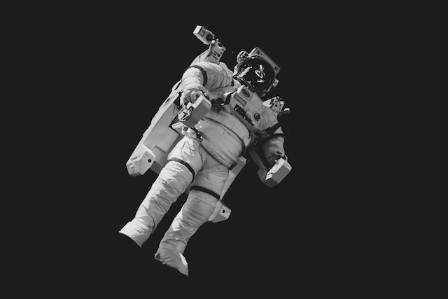
Comprising pants, boots, and the lower waist closure, the lower torso includes features like the waist bearing for improved mobility. The new lunar surface mission suits facilitate bending, rotating at the hips, bending at the knees, and incorporate hiking-style boots for walking.
Layers
The suit incorporates up to 16 layers of diverse materials, ranging from the cooling garment to insulation layers. The outer layer, with water-resistant, bullet-proof, and fire-resistant components, reflects sunlight and may include distinguishing stripes for identification.
Life Support System
Positioned on the suit's back, the backpack holds oxygen for pressurization, a regulator to maintain pressure, a fan for oxygen circulation, and a system to remove exhaled carbon dioxide. Additionally, it provides electricity, a two-way radio, and water for the cooling garment.
Communications System
Traditionally, a communications cap, resembling the Snoopy cap, houses earphones and microphones. Modern suits integrate audio systems directly into the helmet, eliminating the need for a cap.
Helmet
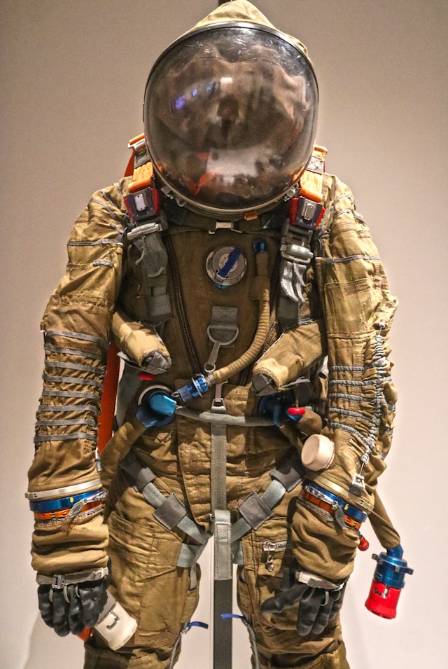
Serving as a pressure containment bubble, the helmet is crafted from robust plastic, featuring a ventilation system for oxygen supply. It includes a foam block for nose scratching, a protective visor, and sun shades. Upcoming Artemis mission suits boast a quick-swap protective visor and an elliptical shape for enhanced visibility.
These intricate spacesuits embody the pinnacle of technology, ensuring astronauts' safety, health, and efficiency during spacewalks, contributing to the ongoing saga of human exploration beyond Earth.
More along this corridor
MID · en

10 Practical Tips for Displaying Art in Your Home
Choose a frame that suits both the artwork and the space where it will hang. If you’re on a budget, opt for art in standard sizes (like A4, A3, or A2)—these have plenty of affordable ready-made frames available.
MID · en
How to pick the best beginner telescope
Buying your first telescope can be exciting, but the sheer number of choices can also make the process confusing. It’s easy to become distracted by impressive specifications and forget to consider whether a particular telescope will actually fit your lifestyle.
MID · en

Fairies in the Deep, Dark Forest
At The Vivid Eye, the aim is to reach many kinds of readers, and it felt like the right moment to focus on a painting that could especially captivate children. With a style and mood reminiscent of illustrated storybooks, Fairies in a Bird’s Nest sparks the imagination of anyone familiar with the enchanted worlds of Peter Pan, Alice in Wonderland, Where the Wild Things Are, or the tricksters and sprites found in Grimm fairy tales. This painting was chosen with the help of a young companion during a museum visit, and its discovery was unexpected: a playful, moonlit gathering of magical beings hidden among otherwise solemn portraits and landscapes in a grand museum setting.
MID · en
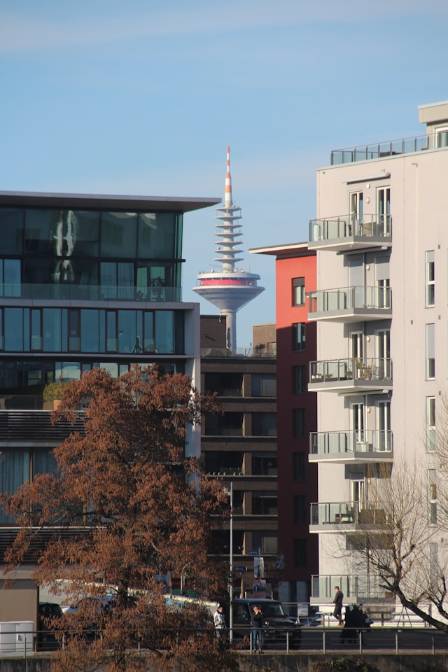
The Europaturm in Frankfurt
Standing tall in the heart of Frankfurt, the Europaturm is one of the city’s most recognizable landmarks. Often referred to as the "European Tower," this impressive structure dominates the skyline and serves as a key telecommunications hub. Its unique design and historical significance make it a point of interest for both locals and visitors.
MID · en
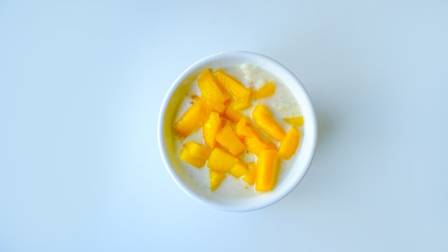
Mango Pomelo Sago Dessert
I first discovered this classic Hong Kong dessert many years ago during a family visit to see our relatives in Hong Kong. It is a refreshing summer dessert soup that can be found in small dessert cafés as well as elegant restaurants.
MID · en
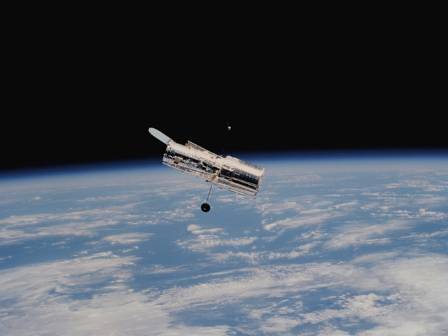
What Is a Satellite?
A satellite is any object that travels around a planet, star, or other celestial body. Earth is a natural satellite because it revolves around the Sun, while the Moon is a natural satellite that circles Earth. When humans send a spacecraft into orbit around Earth or another object in space, that spacecraft is also considered a satellite.